
As the global beverage industry navigates tighter carbon regulations, evolving recycling mandates, and fiercer export competition, packaging choice is no longer just a purchasing decision. Today, it directly impacts supply chain efficiency, brand value, and corporate ESG performance.
In this installment of our technical series, ERJIN PACK breaks down the macro trends, manufacturing advances, and supply chain shifts that will shape beverage packaging over the next five years.
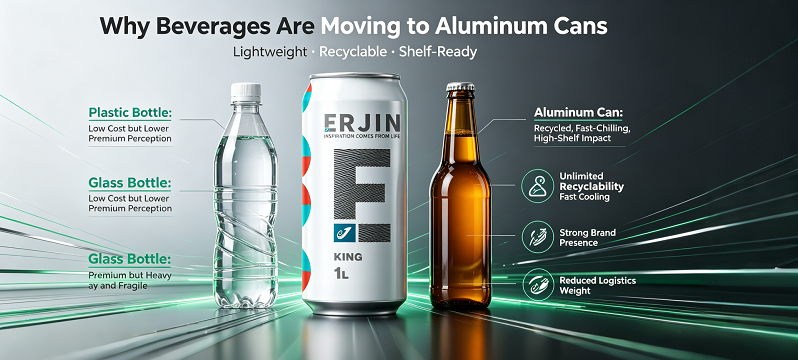
I. Why Beverages Are Moving to Aluminum
The shift from PET plastic and glass to two-piece aluminum cans is gathering speed across nearly every beverage category.
-
Beer & Cider: Rapid growth across Latin America and Southeast Asia is driving demand. Breweries rely on aluminum’s total light barrier to protect delicate hop compounds and prevent flavor oxidation.
-
Functional Drinks & RTD Cocktails: Consumers associate the cold touch of metal with premium quality. Brands leverage matte, high-gloss, and tactile spot-varnish finishes to stand out on crowded retail shelves.
-
CSDs & Sparkling Water: Global legislation targeting single-use plastics is pushing brands toward metal. Aluminum provides the structural strength needed to hold high internal carbonation while offering infinite recyclability.
1. Steady Market Expansion
Industry projections show the global beverage can market growing at a CAGR of 4.3% to 6.1% through 2030. Much of this growth is centered in Southeast Asia, the Middle East, and South America, where demand for canned beer and craft RTDs continues to climb.
2. Standing Out on the Shelf
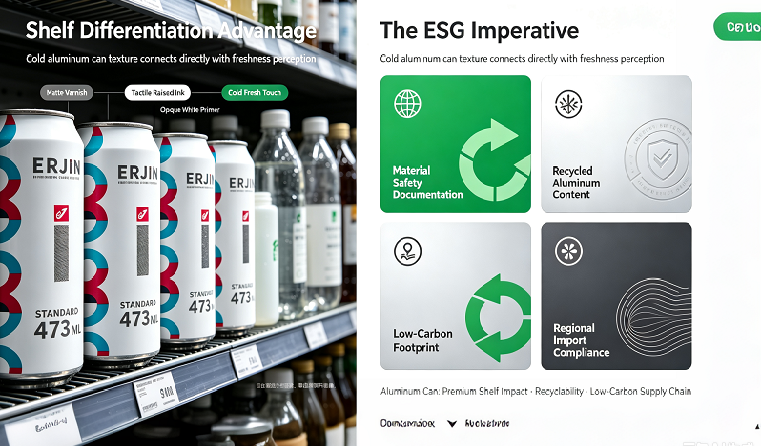
Modern buyers connect cold aluminum with freshness. Dry-offset lithography—using matte clearcoats, raised tactile inks, and opaque white base coats—gives emerging brands a premium look without forcing them into a high price tier.
II. The ESG Imperative: Aluminum Can as a Sustainability Pillar
For international procurement teams, choosing a container is tied directly to sustainability audits and regional import rules. Overseas buyers increasingly require proof of material safety, recycled content, and low carbon footprints before placing volume orders.
Key Sustainability Focus Areas:
-
Lowering Carbon Footprints: Using aluminum alloy coils made with a high percentage of recycled content.
-
Meeting Circular Economy Goals: Complying with EU 2030 packaging directives and local deposit-return systems.
-
Ensuring Food Contact Safety: Transitioning to certified BPA-NI (BPA-Non-Intent) internal coatings.
1. Decarbonization and Energy Efficiency
Primary aluminum smelting is energy-intensive, but melting down post-consumer scrap takes roughly 95% less energy than producing new metal from bauxite ore. As global beverage companies like Coca-Cola, AB InBev, Monster Energy, and Heineken work toward aggressive carbon targets, expanding their use of aluminum is one of their fastest levers.
2. Strict Food-Contact Compliance
Import regulations across North America, Europe, and the Asia-Pacific region demand absolute separation between the liquid and the metal substrate:
-
FDA Compliance: Standard food-contact approval required for North American distribution.
-
EU Food Contact Standards: Tight restrictions on heavy metal leaching and coating migration.
-
BPA-NI Liners: Global adoption of next-generation spray liners to meet tightening health guidelines.
III. Engineering Focus: Can Lightweighting
Trimming container weight without compromising strength under high-speed filling pressure remains a top priority for manufacturers.
Core Lightweighting Techniques:
-
Precision Wall Ironing: Advanced carbide dies used during Drawing & Wall Ironing (DWI) allow manufacturers to thin the sidewall down to under 0.10mm without tearing during high-speed runs.
-
Smaller Neck Finishes: Narrowing the top opening from traditional 60mm profiles to 54mm or 52mm finishes reduces the metal required for the lid, delivering major material savings over millions of units.
-
Optimized Alloys: Refining the grain structure of 3104 and 5182 aluminum alloys improves tensile strength, allowing lighter cans to withstand internal pressures above 90 PSI (6.2 bar).
Over the next five years, continued metallurgy advances are expected to reduce standard two-piece can weight by another 2% to 5%.
IV. Supply Chain Realities: Sourcing for B2B Growth
Fluctuating freight rates and seasonal demand spikes are changing how beverage brands source wholesale packaging:
-
Direct OEM Partnerships: Rather than relying solely on local brokers, brand owners are partnering directly with high-capacity Asian manufacturers to secure consistent production slots.
-
High-Definition Print Standards: Modern 6-to-8 color rotary presses are essential for executing sharp CMYK gradients, exact brand colors, and anti-counterfeiting details.
-
Flexible MOQs: Growing brands need manufacturing partners that offer manageable entry volumes for market testing while maintaining the capacity to scale into millions of units per month.
V. Partnering with ERJIN PACK
Succeeding in competitive retail markets requires balancing technical container performance with a dependable, export-ready supply chain. ERJIN PACK works as a hands-on manufacturing partner, turning advanced metal packaging technology into practical B2B supply solutions.
Why Brands Work with ERJIN PACK:
-
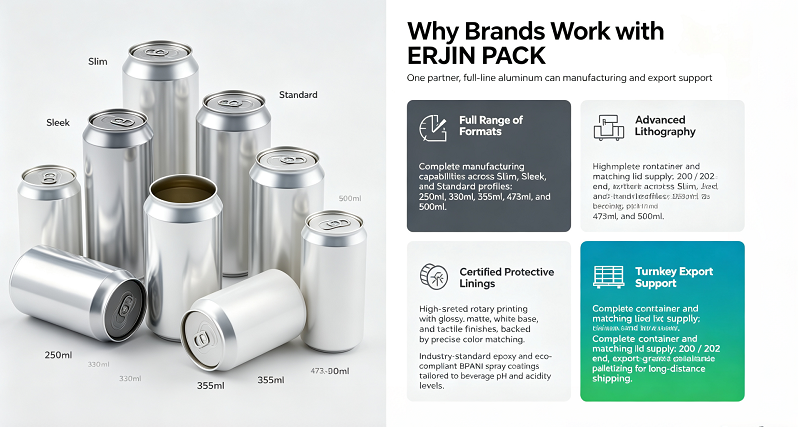
Full Range of Formats: Complete manufacturing capabilities across Slim, Sleek, and Standard profiles (250ml, 330ml, 355ml, 473ml, and 500ml).
-
Advanced Lithography: High-speed rotary printing capable of glossy, matte, white base, and tactile finishes with precise color matching.
-
Certified Protective Linings: Industry-standard epoxy alongside eco-compliant BPANI spray coatings tailored to your beverage’s pH and acidity levels.
-
Turnkey Export Support: Complete container and matching lid (200 / 202 end) supply, backed by export-grade palletizing for long-distance shipping.
If you are launching or scaling a craft beer, soft drink, functional soda, or RTD cocktail line, contact our engineering team to review your volume requirements, liquid specs, and delivery timelines.
Post time: Sep-01-2026


