
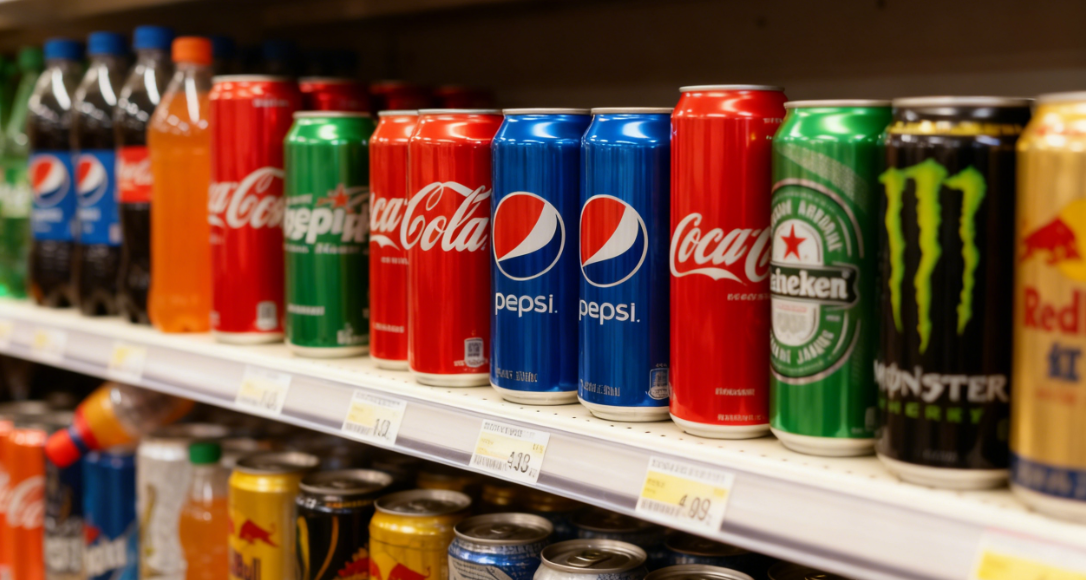
If you look at the production shift for 2026, the data is undeniable: the world is moving away from plastic. From craft breweries in Europe to energy drink giants in North America, the aluminum can has become the baseline for brands that want to survive in a zero-waste, high-efficiency market.
But why now? It isn’t just a trend; it’s a calculated response to the rising costs of glass, the “green taxes” on plastic, and the mechanical superiority of metal. At Erjin, we’ve seen that the choice of packaging is often what determines whether a brand scales globally or stays local.
1. The Engineering Logic: Beyond the Pop
A beverage container is effectively a high-pressure vessel. While consumers see a shiny cylinder, engineers see a high-performance shell designed to protect the flavor’s chemical integrity.
-
Managing the PSI: Our cans are built to sustain up to 90 PSI. This isn’t just a number; it’s what allows your carbonated soda or beer to travel across continents without “flatness” or structural failure.
-
The “Light & Oxygen” Problem: For sensitive beverages like IPAs or cold-brew coffees, UV light and oxygen are the enemy. Aluminum provides a 100% physical barrier, preventing the photo-oxidation that often ruins products stored in clear plastic or green glass.
-
Logistics Weight: At just 12g–13g per unit, aluminum allows you to maximize your shipping container’s weight for the product, not the packaging. In a world of rising freight costs, this is a direct boost to your bottom line.
2. A Cold ROI: Comparing the Formats
In the B2B world, we don’t just look at aesthetics; we look at the landed cost.
-
Aluminum vs. Glass: Glass is premium but heavy and fragile. The breakage rate in global shipping can be as high as 3-5%, whereas aluminum’s failure rate is nearly zero.
-
Aluminum vs. PET: Plastic is cheaper upfront but carries a massive “reputational tax.” With many countries implementing 2026 carbon duties, the “closed-loop” recyclability of an aluminum can—which can be back on a shelf in 60 days—is a much safer long-term investment.
3. Customization as a Market Entry Tool
The growth of the custom aluminum can market is driven by the need for differentiation. A plain silver can won’t win the shelf war in 2026.
Whether you are opting for a Sleek profile to signal “Premium” or a Slim profile for the health-conscious market, the silhouette of your package is your first piece of marketing. At Erjin, we specialize in high-definition, 8-color printing and specialized inner coatings (including BPA-NI options) that ensure your liquid stays as pure as the day it was canned.
4. Navigating the Complexity of Global Supply
Manufacturing a can is a 20+ stage process, from the initial “cupping” of the aluminum coil to the final quality-assurance check. For brands exporting to Southeast Asia, the Middle East, or the Americas, the packaging must meet specific international food-grade certifications. We handle the technical heavy lifting—ensuring no metallic migration or off-notes—so you can focus on the formula inside.
Your product deserves a vessel that works as hard as the liquid it holds. [Contact Erjin’s technical team] to explore our OEM/ODM solutions and stabilize your 2026 production runs.
Frequently Asked Questions (FAQ)
1. Why is aluminum preferred over PET plastic for functional and energy drinks?
Aluminum offers a superior barrier against oxygen and UV light, which can degrade the active ingredients and flavor profiles in functional beverages. Additionally, aluminum cans chill significantly faster than plastic, which is a major factor in “grab-and-go” consumer satisfaction.
2. Can Erjin’s custom aluminum cans handle high-pressure carbonation?
Yes. Our cans are engineered to withstand internal pressures up to 90 PSI. This makes them ideal for highly carbonated drinks like sodas, sparkling waters, and many craft beers that require a stable container to prevent leaking or bursting during transport.
3. What is “BPA-NI” and why is it important for my brand?
BPA-NI stands for “BPA Non-Intent,” meaning the inner coating is formulated without bisphenol A. This is critical for brands looking to export to regions with strict health regulations, such as California (Prop 65) or the European Union, where food-grade safety standards are becoming increasingly stringent.
4. How long does the custom printing and production process take?
For a custom aluminum can order, the typical lead time is 20–25 working days after design approval and payment. This includes high-definition printing, coating, and comprehensive quality testing to ensure the cans meet your brand’s specific requirements.
5. What are the logistics advantages of aluminum for global export?
Aluminum is significantly lighter than glass (averaging only 12g per 330ml unit) and is highly stackable. This optimizes shipping container space and reduces fuel consumption, resulting in a much lower “landed cost” and a smaller carbon footprint for your international supply chain.
Post time: Feb-04-2026


