
In metal beverage packaging and contract filling, 200# aluminum easy-open ends (200 Diameter Aluminum Can Ends) serve as the standard closure size for Slim and Sleek can profiles.
While all 200# ends share the exact same outer seam diameter (52.2 mm), differences in their opening mechanism (SOT vs. RPT) and end contour (CDL vs. B64) directly dictate internal pressure resistance, unit cost, filling line compatibility, and the end-user experience.
At ERJIN PACK, we manufacture and supply precision-engineered 200# aluminum ends alongside our two-piece aluminum can bodies, delivering matched packaging matrices to global breweries, CSD bottlers, and copackers.
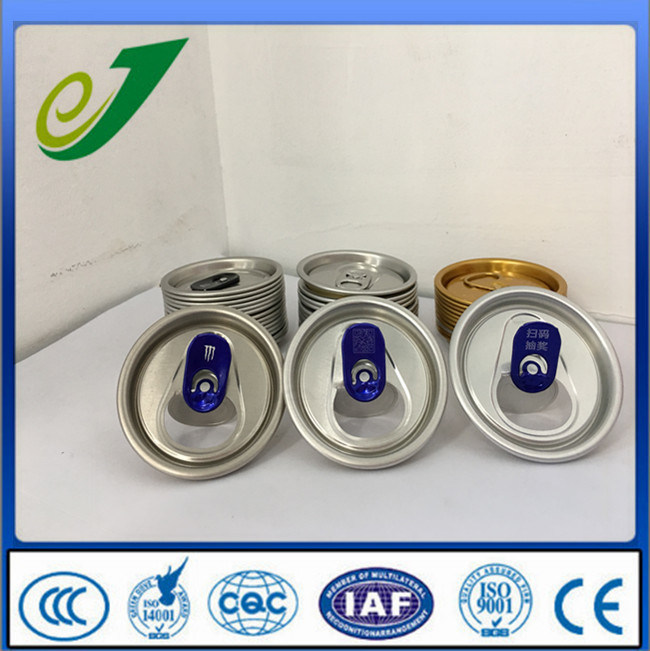
1. Quick Selection Matrix
To help you match the right lid to your formulation and packaging requirements, here is a quick selection matrix:
-
Carbonated Soft Drinks, Sparkling Water, & Craft Beer: Choose SOT B64 200# (high pressure resistance, globally compliant, industry standard).
-
Ready-to-Drink Teas, Juices, & Still Functional Drinks: Choose SOT CDL 200# (ultra-lightweight design, lower material cost).
-
Nitro Cold Brew, Spirits & Mixers, or Wide-Mouth Drinking: Choose RPT B64 / RPT CDL 200# (full tear-off tab for smooth, uninhibited liquid flow).
-
Purees, Concentrates, & Food Cans: Choose RPT B64 200# Full Aperture End (completely removes the top, allowing easy pouring or scooping).
2. Core Classifications: Opening Types & End Profiles
                        ┌─── SOT (Stay-On-Tab) ────► Tab stays attached; pushed inward
200# Aluminum Ends ─────┤
                        └─── RPT (Ring-Pull-Tab) ──► Tab & pull-ring detach completely
Opening Mechanisms: SOT vs. RPT
-
SOT (Stay-On-Tab):
-
Design: Pushing the pull-tab depresses the opening score into the can while keeping the ring-pull firmly anchored to the lid.
-
Key Advantages: Generates no loose metal litter, is 100% recyclable, and complies with global ESG standards and regional environmental laws. It is the standard closure used by major global bottlers and breweries.
-
-
RPT (Ring-Pull-Tab):
-
Design: Pulling the ring detaches the entire tab and opening aperture from the end.
-
Key Advantages: Creates a clean, unobstructed circular orifice for smooth liquid flow. Full-aperture versions remove nearly the entire top end, turning the can into an open drinking cup.
-
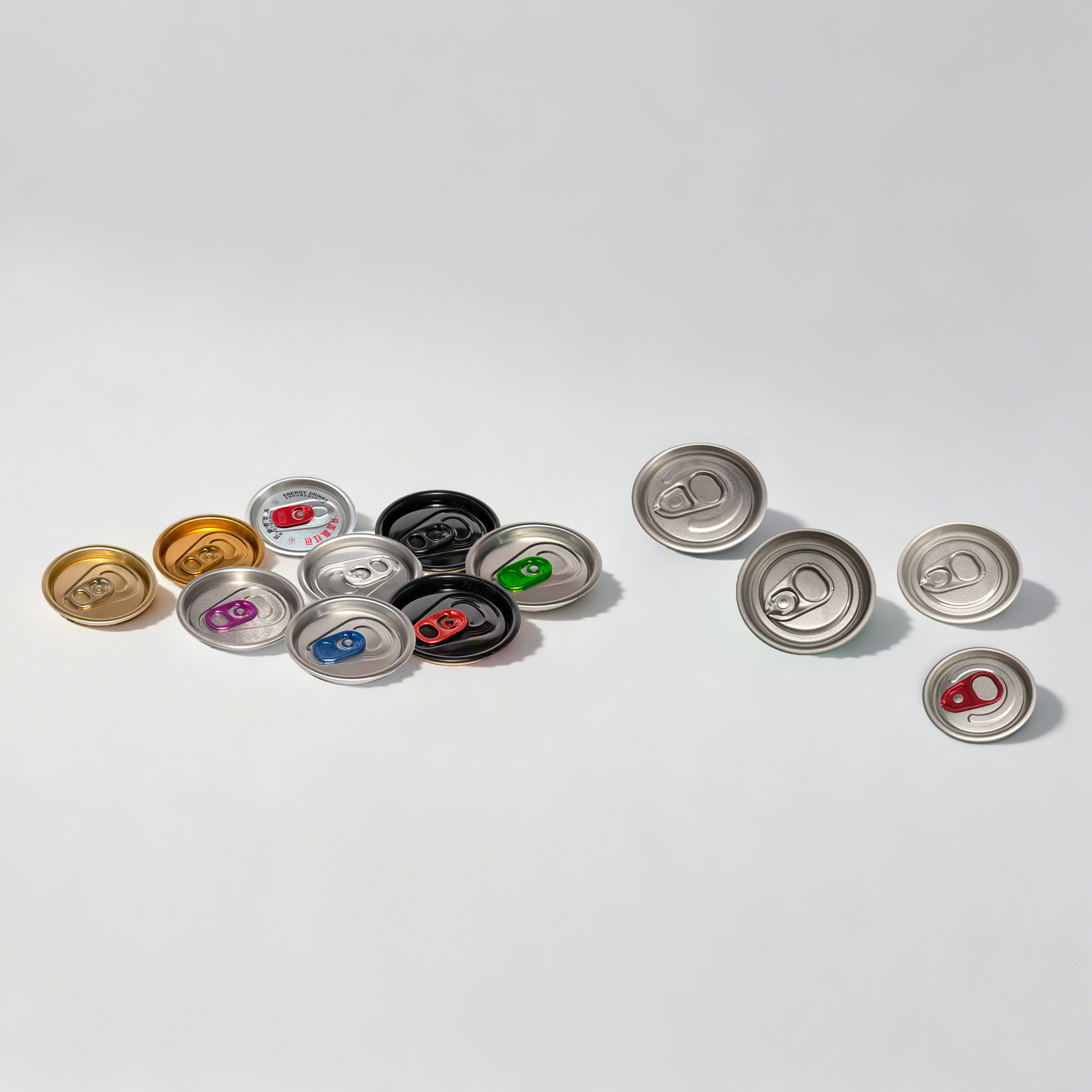
End Profiles: B64 vs. CDL
-
B64 Profile (Standard Contour):
-
Design: Features a classic vaulted dome geometry made with a slightly thicker gauge aluminum.
-
Pressure Performance: Offers high structural rigidity and superior internal pressure limits. It resists bulging or buckling during high-temperature pasteurization, thermal transit, or agitation.
-
-
CDL Profile (Super-Lightweight Contour):
-
Design: A modern, ultra-lightweight design that optimizes the score line and countersink geometry to reduce metal usage while maintaining a hermetic seal.
-
Cost Performance: Uses less aluminum per end to lower raw material costs, though its maximum internal pressure rating is slightly lower than that of the B64 profile.
-
3. Side-by-Side Comparison of 200# Aluminum Ends
| End Model | Opening Mechanism | Profile Structure | Internal Pressure Limits | Ideal Beverage Applications |
| SOT CDL 200# | Stay-On-Tab | Lightweight (CDL) | Standard (Ideal for low/no internal pressure) | Juices, iced teas, RTD herbal teas, still beverages |
| SOT B64 200# | Stay-On-Tab | High-Pressure (B64) | Superior (Engineered for high PSI) | CSDs, colas, beers, ciders, highly carbonated waters |
| RPT CDL 200# | Full Tear-Off | Lightweight (CDL) | Standard (Ideal for low/no internal pressure) | Still drinks requiring a smooth pour, cold brew coffee |
| RPT B64 200# | Full Tear-Off | High-Pressure (B64) | Good | High-flow beers, carbonated energy drinks |
| RPT B64 Full Aperture | Complete Top Removal | Reinforced (B64) | Food-Grade Reinforced | Purees, liquid concentrates, smoothie bases, canned foods |
4. Manufacturing & Stamping Line Considerations
Producing different 200# aluminum ends requires specialized stamping dies, precise score-depth monitoring, and distinct conversion steps on the factory floor:
Score Line & Riveting Operations
-
SOT Manufacturing: Requires a partial-cut safety score line and an eccentric rivet. Score depth must be controlled to micron-level tolerances—ensuring it is easy for consumers to open without risking score fractures under 90 PSI internal line pressure.
-
RPT Manufacturing: Utilizes a full-cut closed-loop die. Because the tab-and-ring assembly detaches completely, it requires a specialized compound lining application along the perimeter score to prevent micro-leaks prior to opening.
Shell Forming & Compound Lining
-
CDL Stamping: Demands high-precision, high-speed servo presses (such as Minster or Stolle systems). Because the aluminum is thinned down, stress distribution during shell forming is critical, and food-grade sealant compound lining must be applied with high uniformity.
-
B64 Stamping: Uses a traditional geometry with a wider operating tolerance window. It accepts slightly thicker compound coatings and works well on conventional high-speed shell lines.
At ERJIN PACK, our end-conversion conversion lines feature automated optical inspection systems that verify score depth, rivet integrity, and lining compound weight across every batch.
5. B2B Procurement & OEM Selection Workflow
For brand managers, co-packers, and procurement leads sourcing 200# aluminum ends, we recommend following a 3-step evaluation model:
[ 1. Calculate Internal Pressure ] ➔ [ 2. Verify Regional Regulations ] ➔ [ 3. Calibrate Seamer Chucks ]
Step 1: Evaluate Beverage Internal Pressure
-
Carbonated Liquids or Liquid Nitrogen Dosing: If internal can pressure meets or exceeds $4.5 \text{ bar}$, specify the B64 profile to prevent post-filling doming or lid deformation during transport.
-
Still Liquids (Pasteurized or Hot-Filled): If there is no risk of high internal pressure, select the CDL profile to optimize unit packaging costs.
Step 2: Confirm Target Market Legislation & Usage
-
Exporting to Europe or North America: Use SOT (Stay-On-Tab) closures. Many jurisdictions restrict or impose environmental penalties on detachable RPT tabs.
-
Foodservice Concentrates, Culinary Liquids, or High-Viscosity Drinks: Select RPT or Full-Aperture ends to eliminate liquid trap zones near the rim and allow clean pouring.
Step 3: Calibrate Seaming Chucks & Rollers
-
Technical Note: Although CDL and B64 ends share the same 200# outer seam diameter, their countersink depths and chuck profiles differ. Switching your filling line from B64 to CDL ends requires replacing the seaming chucks and recalibrating double-seam dimensional specs to avoid seam leaks.
6. The ERJIN PACK Advantage in Can End Supply
Selecting the right lid supplier is as critical as choosing the correct can profile. ERJIN PACK provides turnkey closure solutions designed for high-speed filling lines and global export:
-
Custom Color & Tab Customization: Enhance brand recognition with customized tab colors (red, black, gold, blue), laser-etched QR codes on tabs, or embossed logos directly on the end surface.
-
Food-Contact Safety & Compliance: All ERJIN PACK ends feature food-grade internal protective coatings—available in standard Epoxy or compliant BPANI (BPA-Non-Intent) options meeting US FDA and EU food contact regulations.
-
Precision Double-Seam Fit: Our 200# ends are manufactured to tight dimensional tolerances, ensuring smooth compatibility with major double-seamer equipment including Ferrum, Angelus, Krones, and Cask systems.
-
Export Palletizing & Global Logistics: Shipped in heavy-duty paper sleeves, moisture-sealed in protective stretch wrap, and secured on fumigated export pallets to prevent denting or contamination during ocean freight.
Frequently Asked Questions (FAQ)
Q1: How much cost can CDL ends save compared to B64 ends?
On high-volume manufacturing runs, CDL ends typically yield a 3% to 7% savings in aluminum material costs due to their lighter metal gauge, while also slightly reducing outbound freight weights.
Q2: Which can body profiles accept a 200# lid?
A 200# lid fits any two-piece aluminum container manufactured with a 202 neck reduction. This includes most Slim cans (e.g., 200 ml, 250 ml) and Sleek cans (e.g., 250 ml, 330 ml, 355 ml).
Q3: Can I run SOT B64 ends on a still beverage line like iced tea?
Yes. SOT B64 ends provide a secure, hermetic seal for still drinks. However, because B64 ends use a heavier metal gauge, they cost slightly more than CDL ends, making them an over-specification for non-carbonated applications.
Partner with ERJIN PACK for Wholesale Can Ends & Bodies
Whether you are sourcing standalone 200# aluminum ends or require complete, matched can-and-lid packaging sets, ERJIN PACK offers technical guidance, pilot samples, and factory-direct pricing for global orders.
Contact our engineering and sales team today to request technical specification sheets or a customized quotation for your next production run.
Post time: Sep-17-2026


